Shoulder Rehab Seattle: What to Expect From Your First Visit (Serving Bellevue + the Eastside)
You've been dealing with shoulder pain for weeks: maybe months. You've tried stretching, rest, maybe even a few PT sessions that felt like cookie-cutter exercises. Your shoulder still gets tight, your range of motion isn't where it used to be, and you're wondering if you'll ever get back to throwing, lifting, or even sleeping comfortably again.
If you're looking for shoulder rehab in Seattle and you're tired of one-size-fits-all approaches, you're in the right place. At Major League Activation LLC, we're based in Bellevue and serve the Greater Seattle area with a completely different approach to shoulder rehabilitation: one that actually addresses why your shoulder keeps acting up instead of just treating symptoms.
Here's exactly what you can expect when you walk through our doors for the first time.
The Most Common Shoulder Issues We See
Before we dive into what happens during your visit, let's talk about what brings most people to us. If any of these sound familiar, you're definitely not alone:
Baseball and Softball Players:
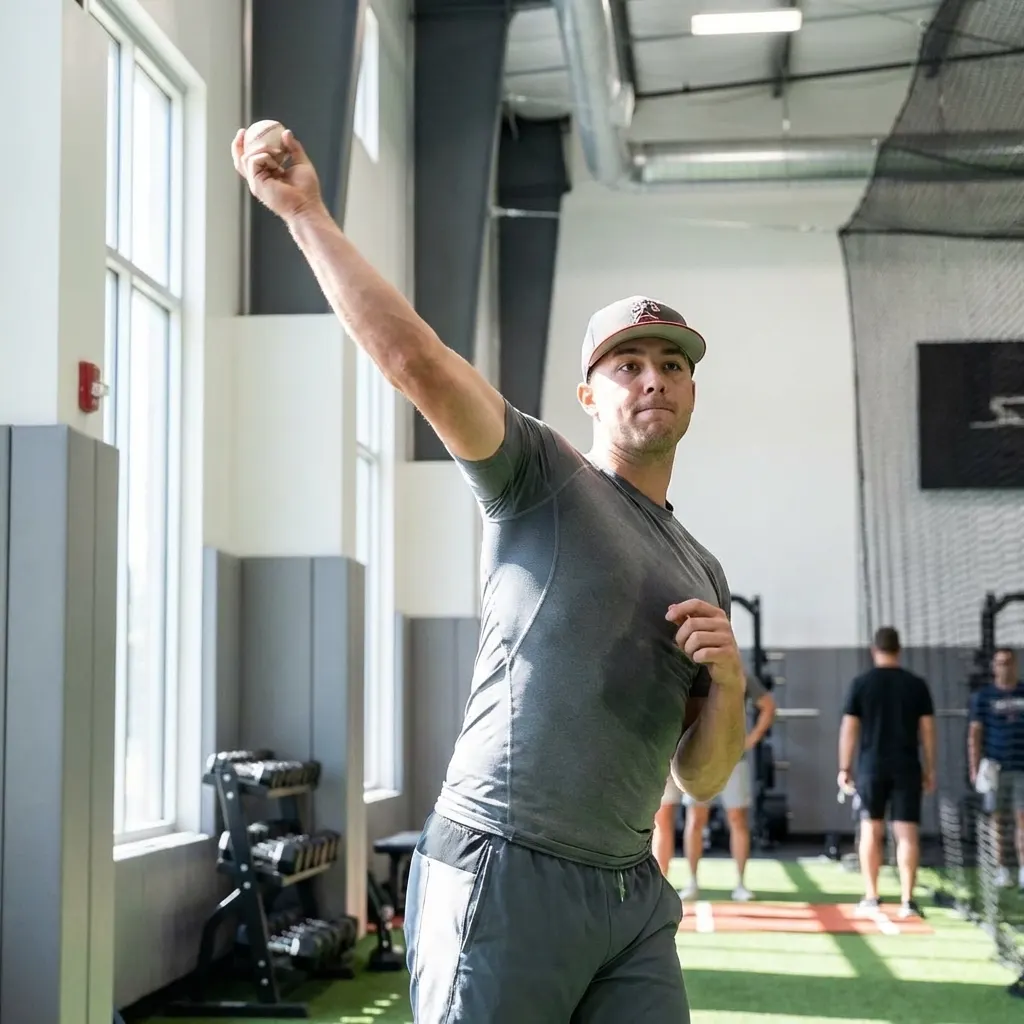
- Throwing shoulder pain that gets worse during or after practice
- Loss of internal rotation that's affecting velocity or accuracy
- "Dead arm" feeling after pitching or throwing
- Shoulder impingement that traditional PT hasn't resolved
Active Adults and Gym-Goers:
- Shoulder pain during overhead movements (pressing, pulling up)
- Chronic tightness that stretching won't fix
- Pain that moves around: sometimes front of shoulder, sometimes back
- Weakness that doesn't improve despite strengthening exercises
Post-Surgery or Post-PT Patients:
- Lingering restrictions after being "discharged" from physical therapy
- Compensations that developed during the rehab process
- Shoulder that feels "different" than it did before injury
The common thread? Most of these issues stem from compensation patterns and muscle inhibition that traditional approaches miss entirely.
What Makes Our Approach Different
Here's where we diverge from typical shoulder rehab in Seattle. While most places focus on strengthening weak muscles and stretching tight ones, we ask a different question: Why did those muscles get weak or tight in the first place?
Our approach combines two cutting-edge techniques:
Muscle Activation Technique (MAT) identifies which muscles aren't firing properly and gets them back online. When your rotator cuff isn't activating correctly, other muscles try to compensate: leading to the pain and tightness you're experiencing.
Neubie electrical stimulation helps retrain proper movement patterns while you're actually moving. Unlike traditional electrical stimulation that just makes muscles contract, the Neubie helps your nervous system relearn how to control your shoulder properly.
This isn't about doing more exercises. It's about making sure your shoulder actually works the way it's supposed to before asking it to get stronger.
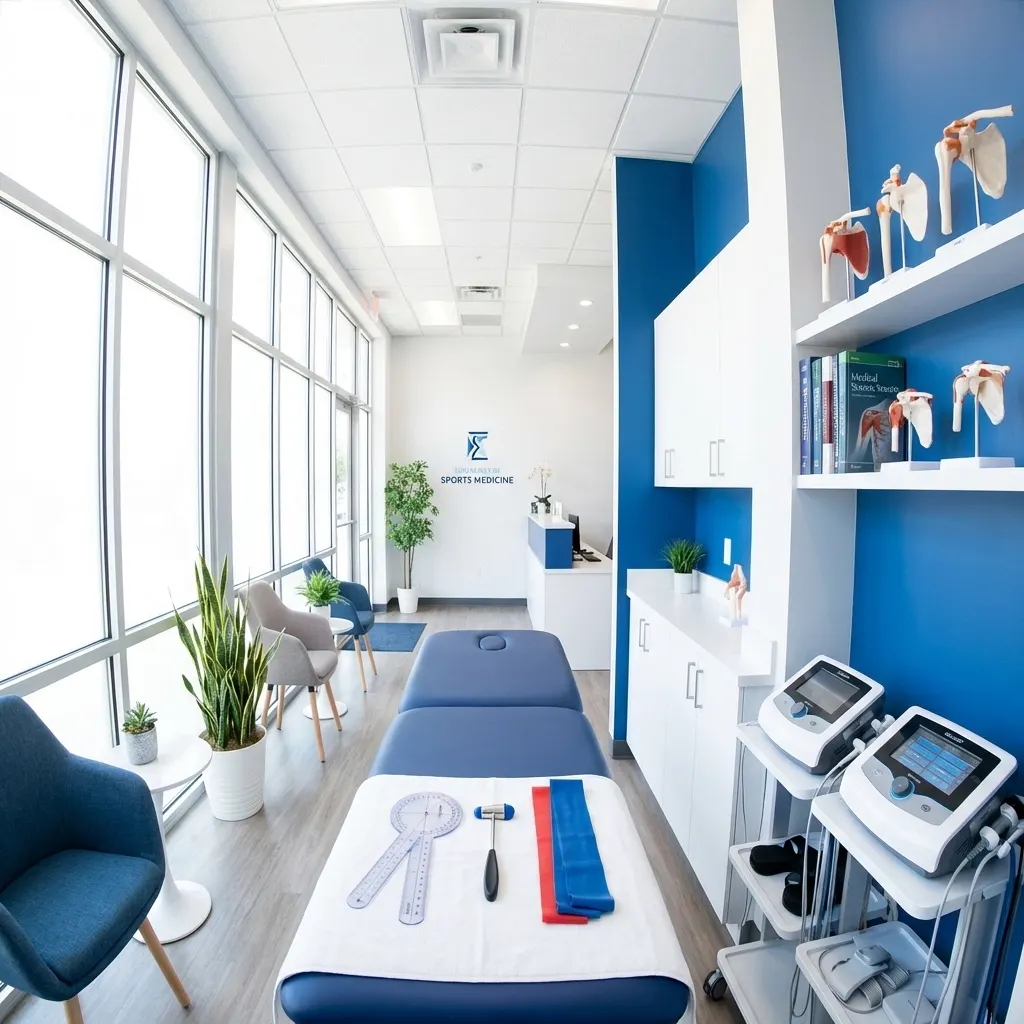
What Happens During Your First Session
Your first visit typically runs about 60 minutes. Here's the step-by-step breakdown:
Initial Discussion (15-20 minutes)
We start by talking through your shoulder history. I want to understand:
- When did this start and what might have triggered it?
- What makes it better or worse?
- What are your goals? (Getting back to pitching? Pain-free workouts? Better sleep?)
- What have you tried already, and how did it work?
This isn't just small talk: understanding your patterns helps me know where to look for the root cause.
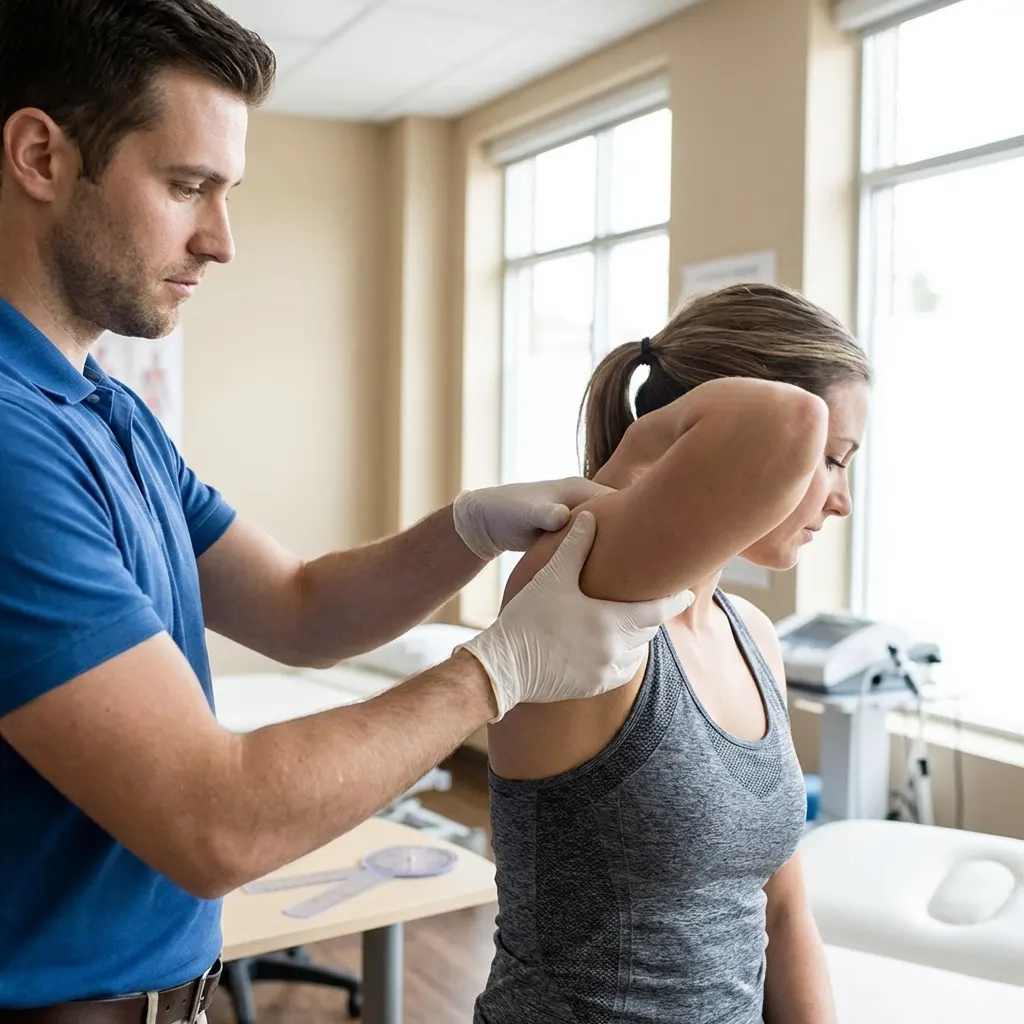
Range of Motion Assessment (10-15 minutes)
Next, we'll test how your shoulder actually moves. I'm looking at:
- Passive range of motion (how far I can move your arm)
- Active range of motion (how far you can move it yourself)
- Internal and external rotation in different positions
- Overhead reaching patterns
The difference between what your shoulder should be able to do and what it actually does tells me a lot about which muscles aren't working properly.
Muscle Function Testing (20-25 minutes)
This is where MAT comes in. I'll test individual muscles to see which ones aren't activating when they should. For shoulders, this typically includes:
- Rotator cuff muscles (all four of them)
- Serratus anterior (crucial for overhead movement)
- Rhomboids and middle traps
- Latissimus dorsi and teres major
When I find muscles that aren't firing, I use specific MAT techniques to get them activated again: often within seconds.
Movement Integration (15-20 minutes)
Once we've identified and activated the problem muscles, we test how this affects your actual movement. You'll repeat some of the range of motion tests and see how your movement responds.
If appropriate, we might also integrate some Neubie stimulation during simple movements to help your nervous system lock in these new patterns.
Game Plan Discussion (5-10 minutes)
Before you leave, we'll talk about:
- What I found and what it means for your goals
- How many sessions you'll likely need
- Any homework (usually minimal: this isn't about more exercises)
- When to schedule your next appointment
What to Wear and Bring
Clothing:
- Tank top or t-shirt that allows easy access to your shoulders
- Shorts or athletic pants
- No need for specific workout clothes: we won't be doing traditional exercises
What to Bring:
- Any recent imaging (MRI, X-ray) if you have it
- List of current medications or supplements
- Water bottle
- Any specific movements or activities you want to test (like your throwing motion)
What NOT to Worry About:
- You don't need to be in "workout shape" for this
- We're not doing painful stretches or aggressive manual therapy
- You won't leave feeling beat up or overly sore
How Many Sessions Will You Need?
This is always the million-dollar question, and the honest answer is: it depends. Every body is different, so these are typical ranges, not promises:
For Recent Issues (less than 3 months):
Plans for recent issues often run 3-6 sessions, especially if compensation patterns haven't become deeply ingrained yet.
For Chronic Issues (6+ months):
Usually takes 6-12 sessions to address all the compensation patterns that have developed over time. Your body has been working around the problem for months: it takes time to retrain better patterns.
For Post-Surgery or Complex Cases:
Often 8-15 sessions, depending on how much compensation developed during the recovery process.
Here's what's different about our approach: we're not trying to see you three times a week for months. Once your muscles are activating properly and your movement patterns improve, the goal is for you to maintain that on your own.
Frequently Asked Questions
Q: Is this going to hurt?
A: MAT is generally very comfortable. The muscle testing might create some temporary muscle fatigue, but it shouldn't be painful. The Neubie can feel intense (it's electrical stimulation after all), but most people find it tolerable and even oddly satisfying.
Q: How is this different from physical therapy?
A: PT focuses on strengthening and mobility. We focus on figuring out why muscles stopped working properly in the first place. Many of our clients come to us after PT because their issues returned: we're trying to address the root cause, not just the symptoms.
Q: Do I need a referral from a doctor?
A: No referral needed. However, if you have recent imaging or specific diagnoses, bring that information along.
Q: Can you help with shoulder impingement?
A: We work with people who have been told they have shoulder impingement, but we don't diagnose or treat medical conditions. What we do is identify which muscles aren't working properly and work to restore normal function. The approach is designed to support recovery, but results vary and aren't guaranteed.
Q: Will my insurance cover this?
A: We're not typically covered by insurance since we don't provide physical therapy or medical treatment. We'll provide you with a detailed receipt that you can submit to your insurance or HSA/FSA.
Why Location Matters: Serving Seattle from Bellevue
We're based in Bellevue but serve clients throughout the Greater Seattle area, including Seattle proper, the Eastside (Redmond, Kirkland, Issaquah), and surrounding communities.
Many of our clients initially searched for "shoulder rehab Seattle" and were happy to find our unique approach, even if it meant a short drive to Bellevue. When you're dealing with chronic shoulder issues that haven't responded to traditional treatment, many find the drive worth it for an approach used by pro and collegiate athletes.
Plus, parking is easier here than downtown Seattle, and we're easily accessible from I-405 and I-90.
Ready to Take the Next Step?
If you're tired of temporary fixes and want to understand why your shoulder keeps bothering you, let's talk. I'm Matt Toth, and I've been helping athletes and active adults work through shoulder issues for over 19 years, including working with professional baseball players.
This isn't about doing more exercises or stretching harder. It's about figuring out what's actually going on and addressing it at the source.
Ready to get started? Use the contact form to request your first appointment. I'll personally follow up and answer any specific questions about your situation.
Want to learn more first? Check out our pages on MAT and Neubie to understand more about our approach, or read about our shoulder-specific programs.
Let's figure out what's really going on and work toward getting you back to doing what you love.
Location: Bellevue (serving Greater Seattle area)
Contact: majorleagueactivation.com/contact
Individual results vary. This article is for educational purposes and is not medical advice. Talk with a qualified medical professional about your specific situation.